

The Lorraine Gorman Foundation
Lorraine Gorman
Lorraine Gorman: A Life Dedicated To Those Who Had Nowhere Else To Turn
For more than forty years, Lorraine Gorman has stood in the space that almost no one else was willing to occupy — the space between a broken system and the people it had failed. Long before "supported accommodation" was a recognised sector, and long before disability advocacy carried the institutional weight it does today, Lorraine was already doing the work: managing boarding houses, fighting for tenants' rights, training staff, writing policy, and standing in rooms with government departments to demand better for people who had no one else to speak for them.
Her career has been built on showing up, year after year, for a population that history has too often looked past.

The Early Days
Lorraine began in the late 1980s at ‘Eversley’ at Teneriffe and sold the facility to have her son Daniel in 1988. In 1990, she ran Linden Court Supported Accommodation Facility in West End. taking on the full weight of day-to-day administration — medication management, bookkeeping, staff supervision, liaison with hospitals and government departments, and the quieter, harder work of advocating for residents who had nowhere else to turn.
From there, her commitment only deepened. Through the 1990s and 2000s, Lorraine moved through role after role across Brisbane's boarding house and supported accommodation sector: Property Manager and Housing Worker with the Boarding House Project Association, Locum Housing Worker with the Queensland Housing Crisis Line, Policy and Procedure developer for Young Women's Housing service, and Housing Worker with the Australian Community Safety and Research Organisation — where she helped people exiting correctional centres find their footing back in the community.
By 2000, she had bought Greenmeadow Court, a supported accommodation facility with 152 registered beds. For six years, Lorraine ran it all: staff recruitment and supervision of a 22-person team, medication administration, cost control, accreditation, and — always — advocacy for the clients living there. Under her management, the facility completed its accreditation process with no conditions attached, three years running. Green Meadow was the first facility in Queensland to be registered and accredited in 2005.

Across almost two decades, Lorraine has given her time to a long list of committees, associations and advisory groups, often simultaneously:
Treasurer and committee member, Boarding House Project Association (1993–2005)
Secretary, Supported Accommodation Providers Association (1995–2006)
Treasurer, Inner Northern Community Housing Inc (1997–2006)
Chairperson, Queensland Housing Crisis Line (1997–1999)
Member, Lord Mayor's Women's Community Advisory Group (1999)
Contributor, Hostel Industry Development Unit's Standards and Accreditation Reference Group and Security of Tenure initiative (1999–)
Member, Residential Services Stakeholders Advisory Council (2004–2008)
She appeared before a Senate Committee to argue the impact of the GST on the community sector. She sat across from Departmental Project Officers, drafted ministerial correspondence, and wrote the policy manuals that gave shape and safety to services supporting some of the state's most vulnerable people. This was the unglamorous, unseen infrastructure of care — built one submission, one committee meeting, one policy document at a time, by someone who kept showing up long after it would have been reasonable to stop.

The Advocacy Beyond The Job Description

A Story Of Personal Sacrifice
It is easy to list committee memberships and job titles. It is harder to capture what it costs to spend a life this way.
For decades, Lorraine has carried responsibility not just for buildings and budgets, but for people — often people who had already been let down by every other system meant to catch them. That is not a role that clocks off at five o'clock. It is a role that asks something of the person carrying it, every single day, for years.
Lorraine gave that. Quietly, consistently, without asking for the recognition that eventually found her anyway.
Recognition
In 2003, the Federal Member for Griffith, Kevin Rudd MP, presented Lorraine with the Griffith Certificate of Appreciation, "in recognition of an outstanding contribution to the Australian community" — a formal acknowledgement, from her own electorate, of work that had already spanned more than a decade.
That same year, Lorraine was awarded the Centenary Medal, an honour instituted by Her Majesty Queen Elizabeth The Second to commemorate the centenary of Federation of Australia. The warrant, signed by then Administrator of the Commonwealth of Australia and countersigned by Prime Minister John Howard, recognised her as among the Australians whose contribution helped define the nation's character.
Few people who do this kind of work ever receive this kind of recognition. Fewer still would say it was ever the reason they did it.

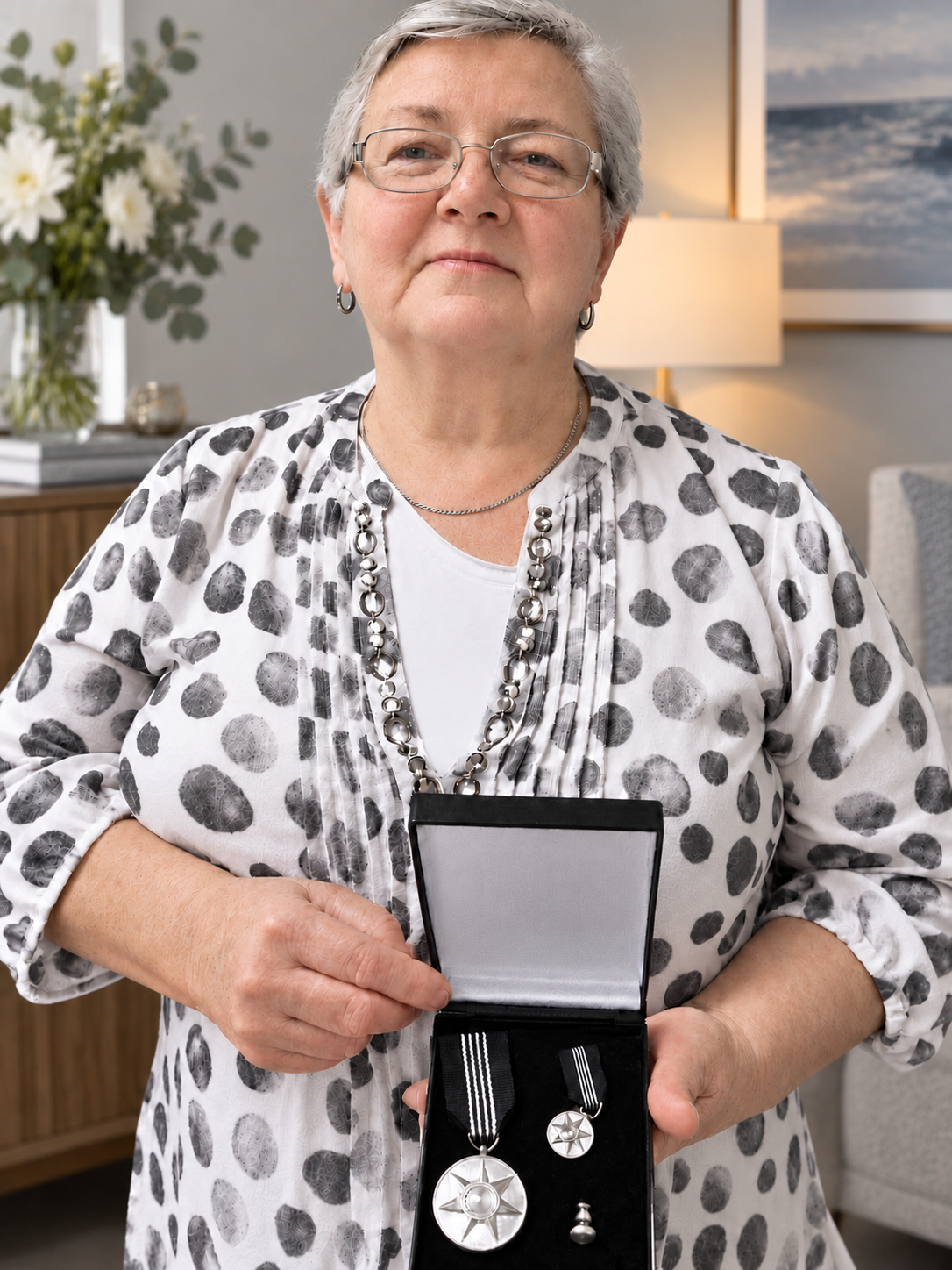

Lorraine's decades in supported accommodation weren't simply a career — they were the foundation for everything that came after. The advocacy, the policy expertise, the hard-won understanding of exactly where Australia's housing and disability systems fail the people who need them most: all of it became the basis for a continuing commitment to ensuring no one falls through the gaps that so many others have been left to fall through.
Her story is a reminder that the most important work in a community is rarely the most visible. It happens in boarding houses and crisis lines, in committee rooms and correspondence, in the quiet decision to keep showing up for people the rest of the world has stopped looking for.
Lorraine Gorman has spent a lifetime being that person. The people whose lives she has touched, and the systems she helped reshape, are her legacy.
A Legacy That Continues To Inspire
